Leather belts
Dress, casual, western and workwear programs developed around the selected leather article, thickness and finishing route.
Full grainTop grainSplitVegetable tanned
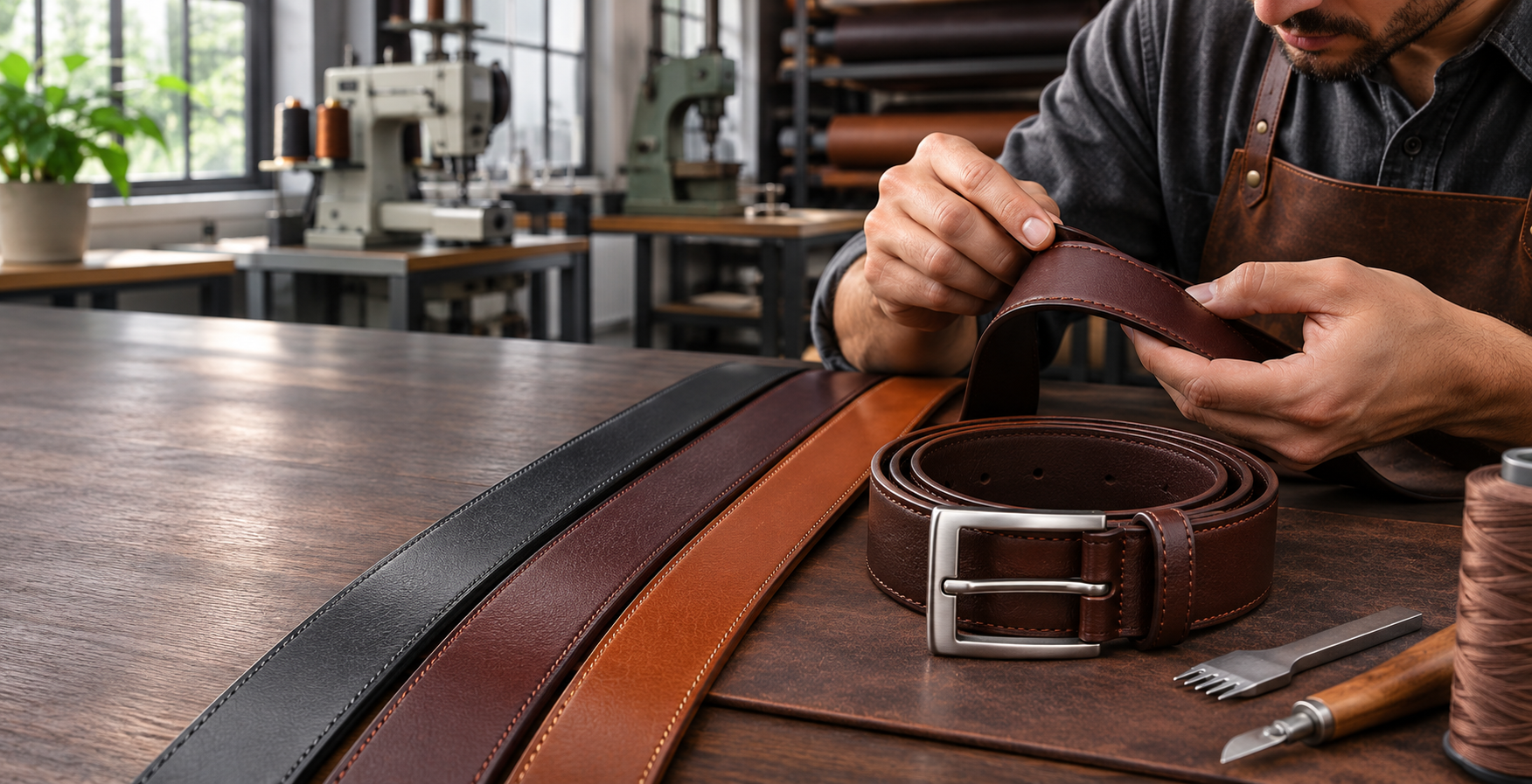
Rui Shi supports B2B belt development from material and hardware decisions through sampling, production and quality review.
Choose a product direction, then refine it through material, buckle, edge, stitching, color, size, branding and packaging decisions.
Dress, casual, western and workwear programs developed around the selected leather article, thickness and finishing route.
Alternative material programs with composition, backing, surface performance and product claims reviewed before sampling.
Micro-adjust systems assessed for track, release action, hardware finish and repeat-use performance.
Flexible structures, seasonal colors and textile trims developed for fashion, golf, uniform and outdoor programs.
Reversible, elastic, studded, wide, workwear and mixed-material styles where the assembly method becomes part of the brief.
The development depth should match what your team has already approved. We define the missing decisions before quotation and sampling.
Production based on a complete tech pack or approved reference.
Development support from a customer profile or collection direction.
Selected constructions adapted to your brand language.
Available directions matched to a defined buying request.
Each stage creates a clear reference for the next, so product decisions do not disappear between sampling and bulk production.
Product type, reference, target market, quantity and timing.
Output: scopeConstruction, material, hardware, branding and capacity are assessed.
Decision: proceed or reviseThe product configuration, included services and open decisions are listed.
Control: comparable scopeLeather or alternative material, buckle, trim and packaging references are aligned.
Control: approved referencesA physical sample is reviewed for appearance, dimensions and function.
Output: review commentsThe final configuration becomes the reference for workmanship and packing.
Change: written reapprovalProduction and checks follow the approved sample and project requirements.
Output: inspection recordConfirmed records support repeat production with approved changes only.
Input: revision recordChecks are defined against the approved sample, specification and destination-market requirements.
Practical guides help buying and product teams compare the same specification, reduce sample revisions and plan approvals.
A checklist for dimensions, construction, hardware, artwork and packing.
How article, grain, split, finish and composition affect a sourcing brief.
Separate labeled size, strap length, hole position and fit assumptions.
Final MOQ, timing, testing and commercial terms are confirmed after the project brief is reviewed.
Share the belt type, material direction, target market, dimensions, hardware, branding, estimated quantity, color and size mix, packaging, required testing and timing. A tech pack or reference image helps.
Yes. Project directions may include leather, PU, woven, braided, elastic, canvas, webbing and mixed constructions. Availability and claims are confirmed for the selected material route.
They depend on construction, material, hardware, colors, SKU mix, packaging, testing and current capacity. We confirm them after reviewing a specific brief rather than publishing a misleading universal number.
Compare the same material, layer structure, dimensions, buckle and finish, branding, size and color mix, packaging, testing, quality requirements and delivery terms.
Relevant records may include material references, specifications, supplier or test documents, approved artwork, packaging instructions and inspection records. Availability depends on the production route and confidentiality.
Send the key facts first. Our team can then identify the decisions needed for quotation and sampling.